Ihre Browserversion ist veraltet. Wir empfehlen, Ihren Browser auf die neueste Version zu aktualisieren.

AKR1B10 as a lipogenic control node in NASH

Posted 6/14/2026

Mechanistic note

AKR1B10 has often been discussed as a disease-associated marker in steatohepatitis and liver injury. However, an increasingly important question is whether AKR1B10 is only a marker of disease state, or whether it can actively contribute to the persistence of a lipogenic hepatic state.

A 2024 study by Lin et al. adds a particularly relevant functional layer to this question. The authors investigated nicotinate-curcumin in experimental NASH models and focused on the AKR1B10/ACCα pathway. In a high-fat/high-fructose rat model and in Ox-LDL/high-glucose-stressed HepG2 cells, they report increased AKR1B10 and ACCα together with changes in Malonyl-CoA, free fatty acids and triglycerides. Treatment with nicotinate-curcumin reduced AKR1B10/ACCα signaling and was associated with lower Malonyl-CoA, FFA and TG levels.

This supports the view that AKR1B10 is more than a passive NASH-associated readout. ACCα catalyzes the formation of Malonyl-CoA, a central building block for fatty acid synthesis. If AKR1B10 helps to maintain ACCα-dependent lipid synthesis, it may participate in stabilizing the metabolic output of the diseased hepatocyte.

This connects back to my earlier PXR/steatosis work in human hepatic cells. In 2015, we reported that ligand-dependent PXR activation and reduced PXR signaling can both promote steatosis, but through distinct mechanisms. PXR activation induced SREBP1a and lipogenic SREBP1 target genes, whereas PXR knockdown increased AKR1B10 and an ACC-dependent branch of de novo lipogenesis. In histologically classified human NASH liver samples, PXR protein was reduced, while AKR1B10, SREBP1a and lipogenic target genes were increased.

The work by Lin et al. therefore does not stand isolated. It strengthens a mechanistic line in which AKR1B10 links stress-associated hepatic remodeling to ACCα, Malonyl-CoA, FFA and triglyceride synthesis.

This is also relevant for the Detoxification State Fixation (DSF) framework. In the DSF model, AKR1B10 is proposed as one of the molecular anchors that may help stabilize an originally adaptive detoxification-lipogenic hepatic state beyond its normal resolution window. The important point is not that AKR1B10 alone “causes” NASH. Rather, AKR1B10 may help maintain one part of a self-reinforcing state: persistent lipogenic output under disease-shaped stress conditions.

From this perspective, AKR1B10 becomes more than a biomarker. It becomes a candidate state-stabilizing node.

This does not prove DSF as a whole. But it provides independent functional support for one of its proposed molecular anchors: AKR1B10 as a lipogenic control node connecting detoxification-associated stress biology with persistent hepatic lipid synthesis.

Related framework:
Detoxification State Fixation (DSF)
https://srebp1a.com/state-fixation/

References

Lin, X.-L. et al. Nicotinate-curcumin improves NASH by inhibiting the AKR1B10/ACCα-mediated triglyceride synthesis. Lipids in Health and Disease 23, 201 (2024). https://doi.org/10.1186/s12944-024-02162-5

Bitter, A. et al. Pregnane X receptor activation and silencing promote steatosis of human hepatic cells by distinct lipogenic mechanisms. Archives of Toxicology 89, 2089-2103 (2015). https://doi.org/10.1007/s00204-014-1348-x

Read the rest of this entry »

SREBP1a and SREBF1 Nomenclature: Why HGNC Remains the Gold Standard

Posted 6/8/2026

In biomedical research, accurate nomenclature is not a cosmetic detail. It determines whether relevant biology remains visible to researchers, databases, search engines, and automated text-mining systems.

The history of human SREBP1a illustrates this point. SREBP1a and SREBP1c are not interchangeable names. They are distinct SREBF1-derived isoforms with different biological and experimental implications. Nevertheless, for many years, human database entries made SREBP1c highly visible while SREBP1a was much harder to find.

The historical oversight

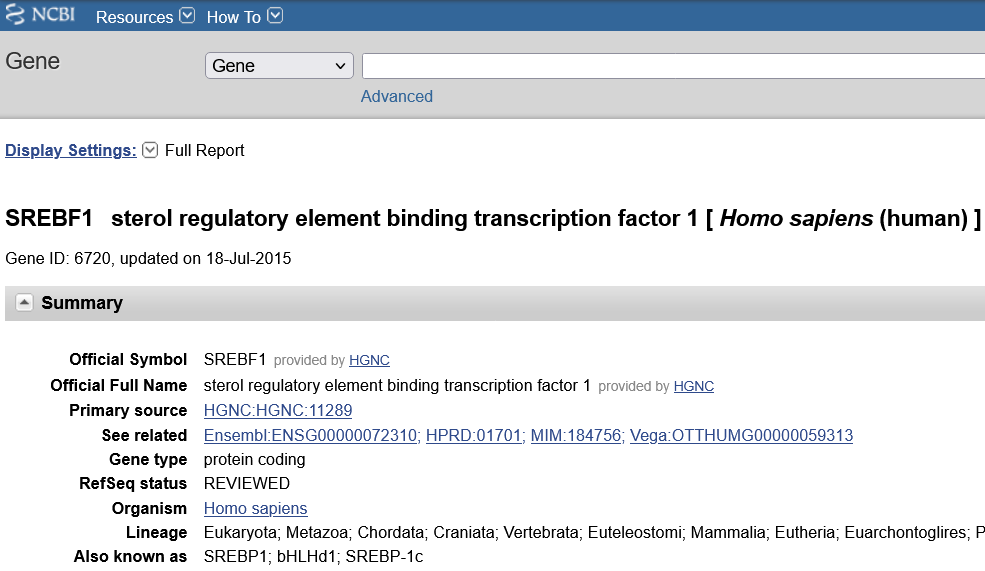
Until early 2016, the official alias structure for the human SREBF1 gene did not properly reflect SREBP1a. Historical database entries listed SREBP1, bHLHd1, and SREBP-1c, but SREBP1a was missing from the visible alias field.

Figure 1 | Historical NCBI Gene entry for human SREBF1, archived in July 2015, showing SREBP1, bHLHd1, and SREBP-1c as aliases, while SREBP1a was not listed.Figure 1 | Historical NCBI Gene entry for human SREBF1, archived in July 2015, showing SREBP1, bHLHd1, and SREBP-1c as aliases, while SREBP1a was not listed.


This was more than a naming inconvenience. If a human protein isoform is missing from alias structures, database searches, literature searches, and automated semantic tools may fail to connect that protein to its gene.

The 2016 correction

In February 2016, I contacted NCBI and HGNC regarding the absence of SREBP1a from the human SREBF1 alias listings. Shortly thereafter, SREBP1a was added, restoring a direct database link between the human SREBP1a protein and the SREBF1 gene.

Figure 2 | NCBI RefSeq curator confirmation from February 1, 2016 documenting that SREBP1a was added as an additional alias to the human SREBF1 gene record (GeneID: 6720).Figure 2 | NCBI RefSeq curator confirmation from February 1, 2016 documenting that SREBP1a was added as an additional alias to the human SREBF1 gene record (GeneID: 6720).


 Figure 3 | HGNC curator confirmation from February 3, 2016 documenting that SREBP1a was added as an additional alias to the human SREBF1 gene record.Figure 3 | HGNC curator confirmation from February 3, 2016 documenting that SREBP1a was added as an additional alias to the human SREBF1 gene record.


This correction mattered because SREBP1a is not a synonym for SREBP1c. Both arise from SREBF1, but they represent distinct isoform biology. Making SREBP1a visible in official alias systems improved the connection between human experimental protein research and genomic database structure.

Current status

In recent years, database displays have changed. Some resources no longer show all transcript- or isoform-specific names in the most prominent summary fields. This can make rapid searches less straightforward.

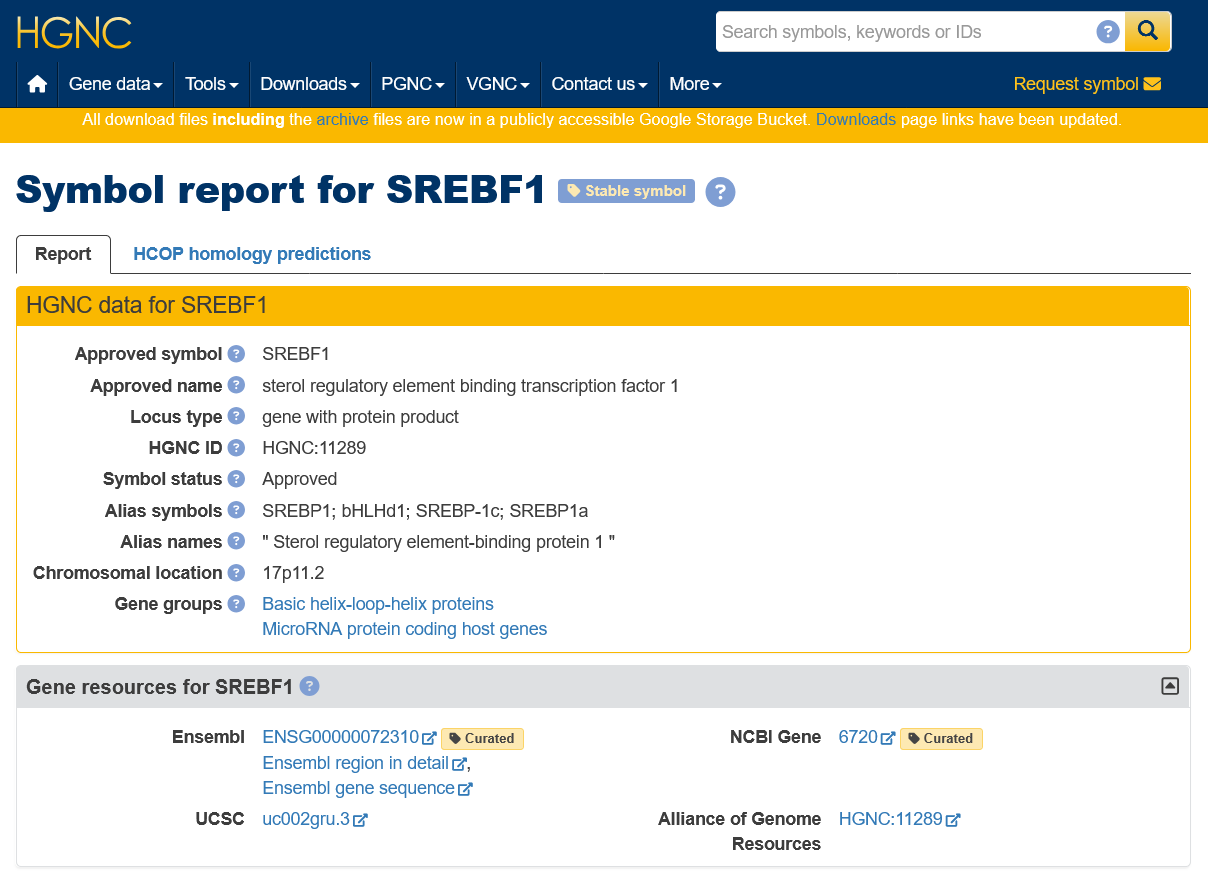
HGNC remains especially important because it provides the official curated framework for human gene nomenclature. For SREBF1, this means that SREBP1a remains connected to the human SREBF1 gene in an official nomenclature context.

Figure 4 | HGNC symbol report for human SREBF1, accessed in June 2026, showing SREBP1a as a listed alias symbol and thereby confirming continued visibility of the isoform in an official gene nomenclature resource.Figure 4 | HGNC symbol report for human SREBF1, accessed in June 2026, showing SREBP1a as a listed alias symbol and thereby confirming continued visibility of the isoform in an official gene nomenclature resource.

Conclusion

The 2016 correction helped preserve an important semantic link: human SREBP1a belongs visibly to the SREBF1 gene context.

That may sound like a small database detail. It is not. When nomenclature is incomplete, biology becomes harder to find. When nomenclature is corrected, human protein isoform research becomes more searchable, more transparent, and easier to integrate across literature, databases, and automated discovery tools.

For human SREBP1a research, this link matters.


Related: Detoxification State Fixation (DSF)

Read the rest of this entry »

REMEMBER, Nikola Tesla

SREBP1a: Perception or Cover-up?

Posted 7/29/2018

Please use the Internet Archive...

Read the rest of this entry »

Interspecies Differences in SREBP1 Signaling

Posted 7/28/2018

Jung et al. Role of the AMPK/SREBP-1 pathway in the development of orotic acid-induced fatty liver. J Lipid Res. 2011 Sep;52(9):1617-25.

 »Whereas decreased phosphorylation of AMPK and modulation of a series of downstream events leading to fatty acid synthesis and lipogenesis were observed in rat hepatocytes and human hepatoma cell lines, mouse hepatocytes were resistant to OA with regard to the AMPK/SREBP-1-dependent lipogenic pathway. Similar results were observed in animal studies using SD rats and C57BL/6 mice. These two species showed completely different responses to OA in terms of AMPK/SREBP-1 signaling and development of steatosis, indicating that not only pharmacokinetic but also pharmacodynamic factors participate in determining interspecies differences.«

Read the rest of this entry »

The Curtain Falls

Mouse models of human disease: An evolutionary perspective.

Posted 4/18/2018
Perlman RL. Mouse models of human disease: An evolutionary perspective. Evol
Med Public Health. 2016 May 21;2016(1):170-6.

Abstract

The use of mice as model organisms to study human biology is predicated on the genetic and physiological similarities between the species. Nonetheless, mice and humans have evolved in and become adapted to different environments and so, despite their phylogenetic relatedness, they have become very different organisms. Mice often respond to experimental interventions in ways that differ strikingly from humans. Mice are invaluable for studying biological processes that have been conserved during the evolution of the rodent and primate lineages and for investigating the developmental mechanisms by which the conserved mammalian genome gives rise to a variety of different species. Mice are less reliable as models of human disease, however, because the networks linking genes to disease are likely to differ between the two species. The use of mice in biomedical research needs to take account of the evolved differences as well as the similarities between mice and humans.

Read the rest of this entry »

The Blinded Scientific Community - Built up a Murine Hospital???

Posted 4/17/2018

What is going on?

Q?

Future proves Past

Be strong (anons)

Read the rest of this entry »

Ready for paradigm shift?

Posted 8/22/2017

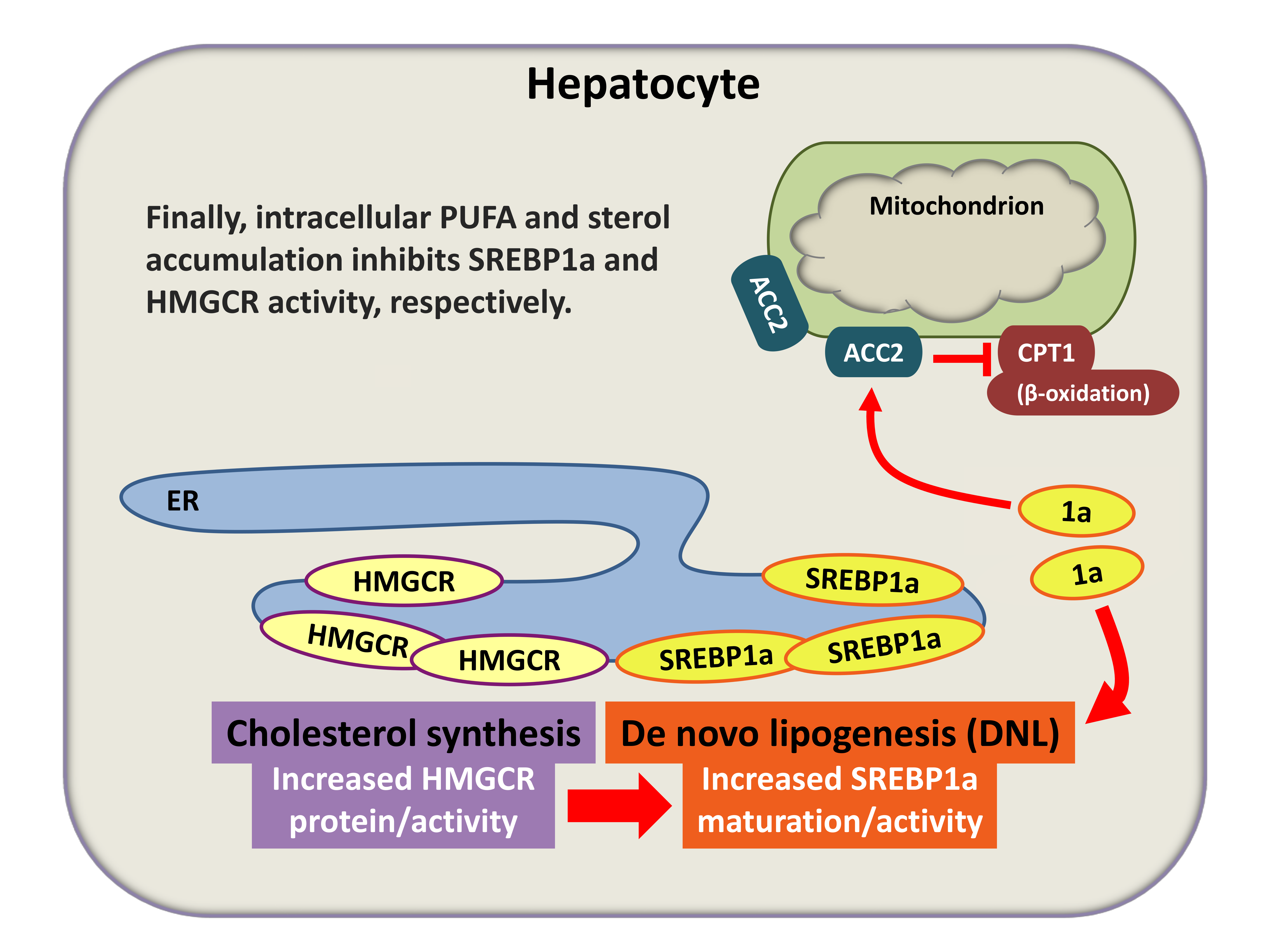
HMGCR-dependent SREBP1a maturation (simplified scheme). 1a, mature SREBP1a protein; ER, endoplasmic reticulum. (see section »PXR versus LXR«) HMGCR-dependent SREBP1a maturation (simplified scheme). 1a, mature SREBP1a protein; ER, endoplasmic reticulum. (see section »PXR versus LXR«)

The dogma of the SREBP1 protein:

»Sterols inhibit the cleavage of the precursor, and the mature nuclear form is rapidly catabolized, thereby reducing transcription.« (see ref 1, ref 2, ref 3)

However, with all due respect, I would like to mention that the results of dozens of scientific articles contradict and/or do not support this dogma. The literature analysis on srebp1a.com and the results of the following mentioned article reveal it.


Hwang et al. Contribution of Accelerated Degradation to Feedback Regulation of 3-Hydroxy-3-methylglutaryl Coenzyme A Reductase and Cholesterol Metabolism in the Liver. J Biol Chem. 2016 Jun 24;291(26):13479-94.


Before the literature analysis on srebp1a.com and the analysis of the article mentioned above, please consider the following two points:

1. HMGCR is the rate-limiting enzyme of sterol biosynthesis.

2. HMGCR protein/activity induces the maturation of SREBP1.

Read the rest of this entry »

Time is running out fast

Posted 8/13/2017

Alarming predictions:

Estes et al. Modeling the epidemic of nonalcoholic fatty liver disease demonstrates an exponential increase in burden of disease. Hepatology. 2017 Aug 12. doi: 10.1002/hep.29466. [Epub ahead of print]


Abstract

BACKGROUND:

Nonalcoholic fatty liver disease (NAFLD) and resulting nonalcoholic steatohepatitis (NASH) are highly prevalent in the US, where they are a growing cause of cirrhosis and hepatocellular carcinoma (HCC), and increasingly, an indicator for liver transplantation.

METHODS:

A Markov model was used to forecast NAFLD disease progression. Incidence of NAFLD was based on historical and projected changes in adult prevalence of obesity and type 2 diabetes mellitus (DM). Assumptions were derived from published literature where available, and validated using national surveillance data for incidence of NAFLD-related HCC. Projected changes in NAFLD-related cirrhosis, advanced liver disease, and liver-related mortality were quantified through 2030.

RESULTS:

Prevalent NAFLD cases are forecasted to increase 21%, from 83.1 (2015) to 100.9 million (2030), while prevalent NASH cases will increase 63% from 16.52 to 27.00 million cases. Overall NAFLD prevalence among the adult population (aged ≥15 years) is projected at 33.5% in 2030, and the median age of the NAFLD population will increase from 50 to 55 years during 2015-2030. In 2015, approximately 20% of NAFLD cases were classified as NASH, increasing to 27% by 2030, a reflection of both disease progression and an aging population. Incidence of decompensated cirrhosis will increase 168% to 105,430 cases by 2030, while incidence of HCC will increase by 137% to 12,240 cases. Liver deaths will increase 178% to an estimated 78,300 deaths in 2030. During 2015-2030, there are nearly 800,000 excess liver deaths.

CONCLUSIONS:

With continued high rates of adult obesity and DM, and an aging population, NAFLD-related liver disease and mortality will increase in the US. Strategies to slow the growth of NAFLD cases and therapeutic options are necessary to mitigate disease burden.

Source: HEPATOLOGY

Read the rest of this entry »

The negligible (mature) SREBP1a?

Posted 6/13/2017

One further newly published peer-reviewed article:

Tajima-Shirasaki et al. Eicosapentaenoic Acid Downregulates Expression
of the Selenoprotein P Gene by Inhibiting SREBP-1c Independently of the AMPK
Pathway in H4IIEC3 Hepatocytes. J Biol Chem. 2017 May 2. pii: jbc.M116.747006.

Introduction:

According to the purpose of the study, it was the aim to find out if hepatic SREBP1c induces the transcripition of SELENOP eicosapentaenoic acid (EPA)-dependently or rather if EPA, a polyunsaturated fatty acid (PUFA), inhibits the activity of SREBP1c.


Evaluation:

Without going into great detail, it is useful to consider the following three issues:

  1. For knock-down experiments the authors used siRNA which simultaneously targets both, the SREBP1c and SREBP1a transcript (see here). What about SREBP1a?
  2. In overexpression experiments the authors only transfected the precursor 1a isoform of SREBP1 but transfected separately both, the precursor AND mature isoform SREBP1c. (Only the mature SREBP1 protein is transcriptionally active). However, they have concluded: »The mature SREBP-1c overexpression especially inhibited the suppressive effect of EPA on SELENOP promoter activity (Fig. 3C); however, SREBP-1a overexpression had no effect (data not shown). These results suggest an association of SREBP-1c activity with the EPA-induced suppression of SELENOP expression.« What about the mature SREBP1a?
  3. In regard to the ChIP assay they have used, the authors assume: »...treatment with EPA was found to decrease the binding of SREBP-1c to Selenop promoter (Fig.5B), indicating that EPA decreases SELENOP promoter activity and gene expression via SREBP-1c inactivation...« It is important to know that SREBPs function as dimers in which the individual molecules can form homo- or heteromers (see here). What about the mature SREBP1a?
Read the rest of this entry »

The Question

“Up-to-Date” versus “Old Fashioned”: Two Brand New Articles

Posted 3/22/2017

While Cho et al. have written a modern article in regard to hepatic SREBP1a, it may well be that Rong et al. (“Horton Lab”) have done everything to maintain the conventional view about SREBP1c and SREBP1a in hepatic lipogenesis.


*** First article: Cho et al. ***

ENOblock, a unique small molecule inhibitor of the non-glycolytic functions of enolase, alleviates the symptoms of type 2 diabetes. Sci Rep. 2017 Mar 8;7:44186.


Statements:

»…the 12 mg/kg ENOblock treatment decreased the serum level of free fatty acid compared to untreated db/db mice (Fig. 2G). This could be due to the observed inhibition of Srebp-1a and -1c, which are key regulators of lipid homeostasis.«

»ENOblock treatment normalized Srebp-1a expression to the level observed in normal B6 mice and also reduced the expression of Srebp-1c (Fig. 3R,S).«


*** Second article: Rong et al. ***

Expression of SREBP-1c Requires SREBP-2-mediated Generation of a Sterol Ligand for LXR in Livers of Mice. Elife. 2017 Feb 28;6. pii: e25015.


The following statements must be considered very critically:

  • Statement 1: »Expression of SREBP-1c Requires SREBP-2-mediated Generation of a Sterol Ligand for LXR in Livers of Mice.« (The title of this article)
  • Statement 2: »The only molecular signature we found that differed between hepatocyte-Srebf-2-/- and hepatocyte-Scap-/- livers was the retained expression of SREBP-1a and ACC2 in the livers of hepatocyte-Srebf-2-/- mice. These studies confirm that SREBP-1a has only a minor role in regulating basal and stimulated cholesterol and fatty acid synthesis in the liver.«

Evaluation of statement 1:

In my opinion, the title is not supported by the results – Au contraire:

  1. They have examined liver tissue extracts for a possible endogenous sterol LXR ligand whose concentration is greatly reduced in hepatocyte-Srebf-2-/- livers. However, they have not found any. In contrast, the liver tissue concentrations of the potent endogenous sterol LXR ligands desmosterol (Ref. 1) and 24,25-epoxycholesterol (Ref. 2; and references therein) were elevated 3-fold and 7-fold, respectively, in hepatocyte-Srebf-2-/- livers of 12-13 week-old mice (see here).
  2. The studies with T0901317 and 0,2% Cholesterol are far from being sufficient in order to support the conclusion/title of this article. (I will get back to this topic in more detail soon; see section »PXR versus LXR«)

Evaluation of statement 2:

  1. As they have already written in the Results section: »…ACC2 expression, which is primarily regulated by SREBP-1a, was only slightly (-30%) lower (in hepatocyte-Srebf-2-/- livers).« Furthermore, in SREBP1a-deficient mice and SREBP1a-deficient human hepatocytes, ACC2 mRNA expression is only 40-50% lower (Ref. 3, Ref. 4).
  2. ACC2 was only 40% lower in S1P-inhibited human hepatocytes (Ref. 4). (Inhibition of S1P blocks the proteolytic activation of SREBP proteins)
  3. ACC2 was not measured in livers of mice that lack Scap in hepatocytes (Ref. 5, Ref. 6 and this article).
  4. Beside the lower mRNA expression of SREBP1a in hepatocyte-Srebf-2-/- livers (-20%; see here), they do not mention the 40% and 70% reduced hepatic SREBP1a mRNA level in hypomorphic SREBP-2 and Srebf-2-/- mice which was observed by Vergnes et al. (Ref. 7). Furthermore, the reduced mRNA expression of SREBP1a in livers of hepatocyte-Srebf-2-/- mice gives no indication of whether there is an even more pronounced reduction in the amount of the mature SREBP1a protein. (Also see section »SREBP1a«)

Read the rest of this entry »

SREBP1a: No Synonym for SREBP-1c

Posted 1/18/2017

Mary K. Bennett, Timothy F. Osborne and co-authors nailed it:

»Although the existence of gene families and overlapping mRNAs in higher eukaryotes has been known since the 1970s, the extensive clusters of highly related genes and the almost ubiquitous nature of alternative mRNA processing was not fully realized until the sequence of the human genome was reported 7 years ago. The sequencing of genomes from several other species has confirmed this as a basic feature of all complex eukaryotic organisms. Thus, a major goal now is to define precisely the unique and common roles for the different proteins produced from overlapping transcripts and for closely related proteins in the same family. This is complicated when the proteins are co-expressed in the same cells and function as dimers/multimers in which the individual molecules can form homo- or heteromers as in the case of the mammalian SREBPs.« [Bennett et al. Selective binding of sterol regulatory element-binding protein isoforms and co-regulatory proteins to promoters for lipid metabolic genes in liver. J Biol Chem. 2008 Jun 6;283(23):15628-37.]

2 decades ago, Nobel Laureates Goldstein & Brown discovered SREBPs (SREBP1a, SREBP1c and SREBP2) as key transcriptional regulators of lipid metabolism. However, until January 2016, one year ago, the only "synonyms" for the SREBF1 gene were SREBP1, bHLHd1 and SREBP-1c (provided by NCBI and HGNC). SREBP1a could not be found! This “mistake” was corrected in February 2016, after I have mentioned it. See here: NCBI and HGNC.


Not only SREBP1c, also SREBP1a is a transcript of SREBF1 and SREBP-1c is NOT a synonym for SREBP1a.

Read the rest of this entry »

Search Engines in Research and Science

Posted 12/14/2016
It is my strong belief that nowadays it is very important, also in research and science, to use search engines to:
  1. Create new conceptions.
  2. Reach the largest possible audience.
  3. Achieve greater independence and transparency.
Popular search engines:
Read the rest of this entry »