
In biomedical research, accurate nomenclature is not a cosmetic detail. It determines whether relevant biology remains visible to researchers, databases, search engines, and automated text-mining systems.
The history of human SREBP1a illustrates this point. SREBP1a and SREBP1c are not interchangeable names. They are distinct SREBF1-derived isoforms with different biological and experimental implications. Nevertheless, for many years, human database entries made SREBP1c highly visible while SREBP1a was much harder to find.
The historical oversight
Until early 2016, the official alias structure for the human SREBF1 gene did not properly reflect SREBP1a. Historical database entries listed SREBP1, bHLHd1, and SREBP-1c, but SREBP1a was missing from the visible alias field.
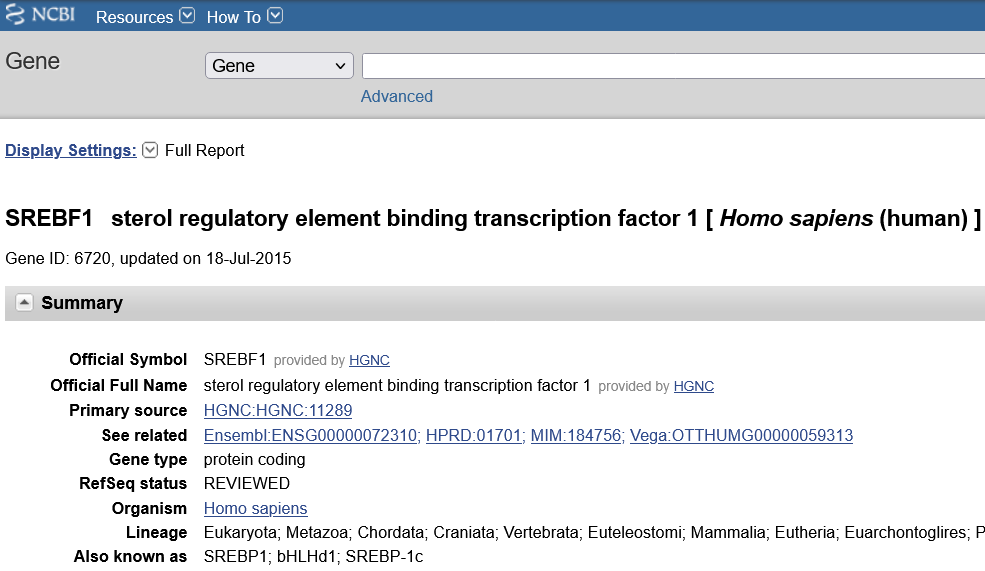 Figure 1 | Historical NCBI Gene entry for human SREBF1, archived in July 2015, showing SREBP1, bHLHd1, and SREBP-1c as aliases, while SREBP1a was not listed.
This was more than a naming inconvenience. If a human protein isoform is missing from alias structures, database searches, literature searches, and automated semantic tools may fail to connect that protein to its gene.
The 2016 correction
In February 2016, I contacted NCBI and HGNC regarding the absence of SREBP1a from the human SREBF1 alias listings. Shortly thereafter, SREBP1a was added, restoring a direct database link between the human SREBP1a protein and the SREBF1 gene.
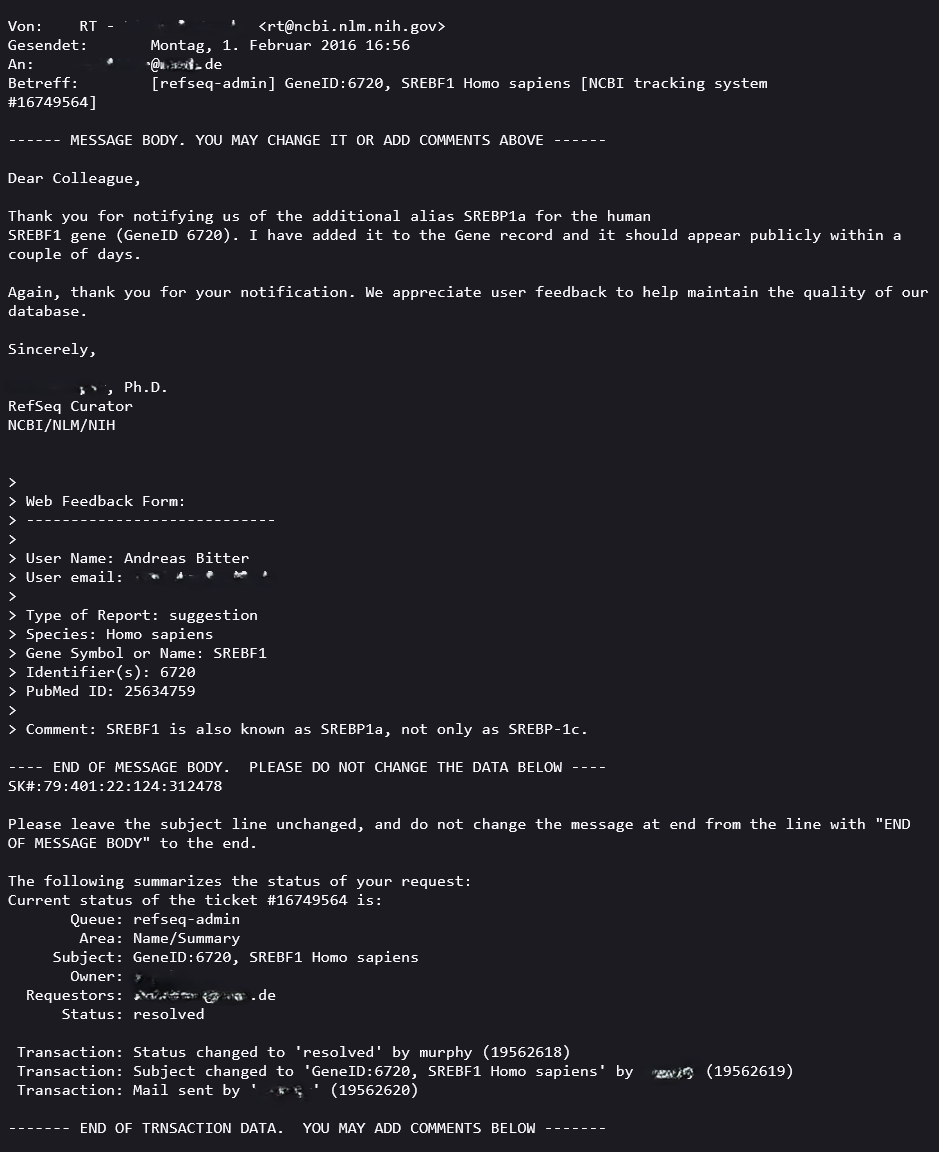 Figure 2 | NCBI RefSeq curator confirmation from February 1, 2016 documenting that SREBP1a was added as an additional alias to the human SREBF1 gene record (GeneID: 6720).
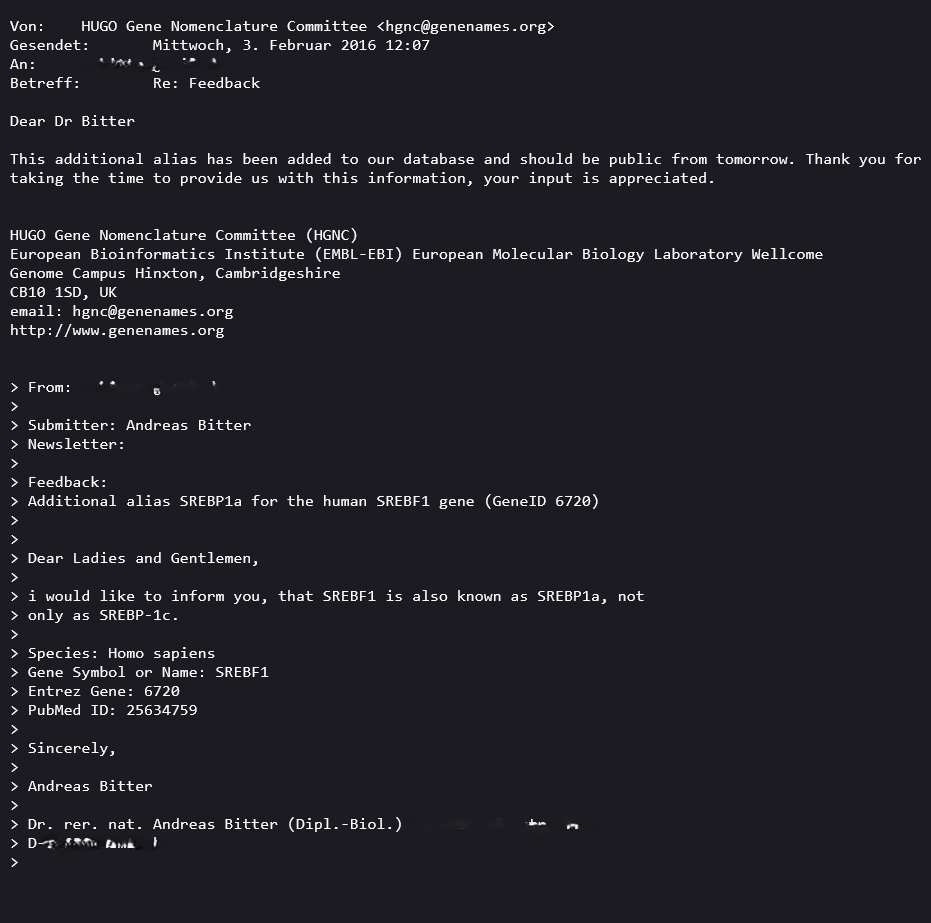 Figure 3 | HGNC curator confirmation from February 3, 2016 documenting that SREBP1a was added as an additional alias to the human SREBF1 gene record.
This correction mattered because SREBP1a is not a synonym for SREBP1c. Both arise from SREBF1, but they represent distinct isoform biology. Making SREBP1a visible in official alias systems improved the connection between human experimental protein research and genomic database structure.
Current status
In recent years, database displays have changed. Some resources no longer show all transcript- or isoform-specific names in the most prominent summary fields. This can make rapid searches less straightforward.
HGNC remains especially important because it provides the official curated framework for human gene nomenclature. For SREBF1, this means that SREBP1a remains connected to the human SREBF1 gene in an official nomenclature context.
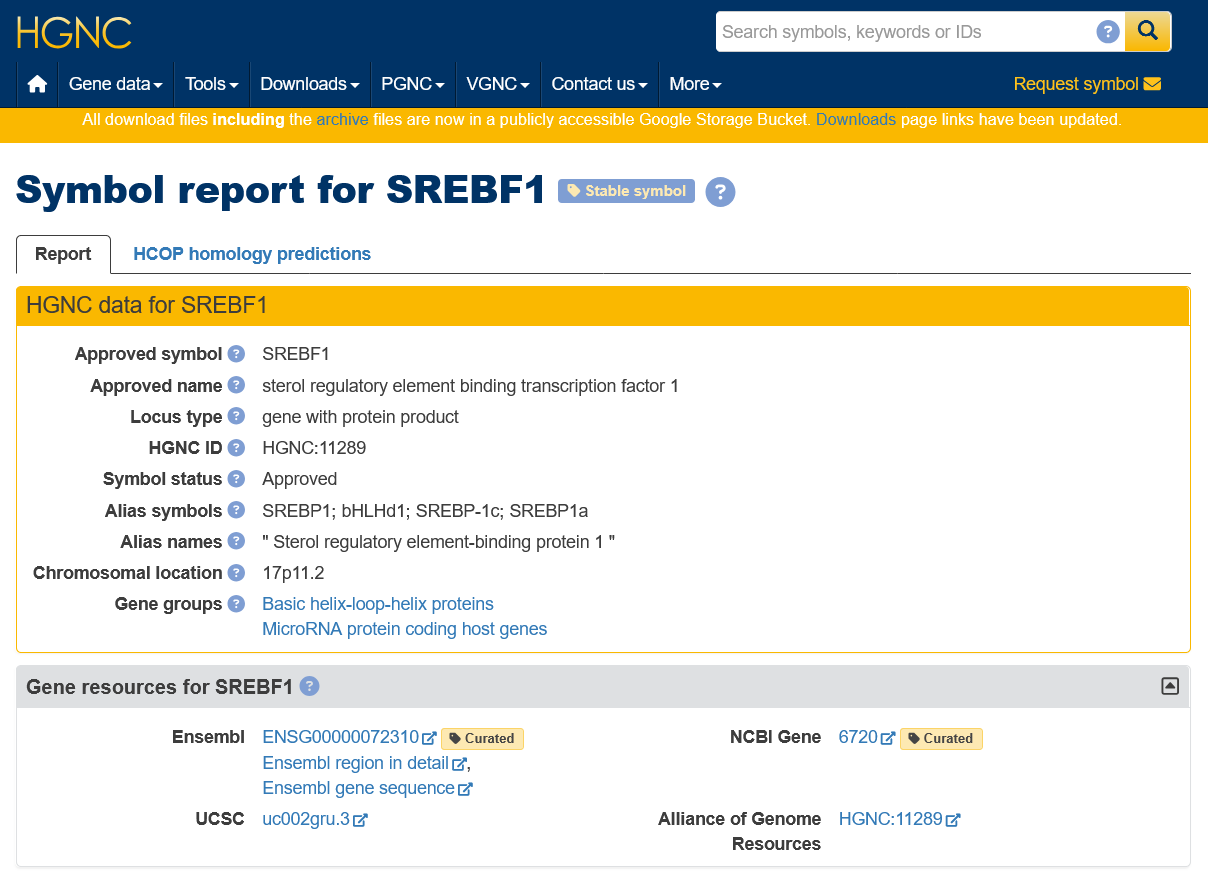 Figure 4 | HGNC symbol report for human SREBF1, accessed in June 2026, showing SREBP1a as a listed alias symbol and thereby confirming continued visibility of the isoform in an official gene nomenclature resource.
Conclusion
The 2016 correction helped preserve an important semantic link: human SREBP1a belongs visibly to the SREBF1 gene context.
That may sound like a small database detail. It is not. When nomenclature is incomplete, biology becomes harder to find. When nomenclature is corrected, human protein isoform research becomes more searchable, more transparent, and easier to integrate across literature, databases, and automated discovery tools.
For human SREBP1a research, this link matters.
Related: Detoxification State Fixation (DSF)